From Kitchen Table to Market Stall: Andrea’s Story
Andrea didn’t set out to become a ceramic artist.
At the time, she was simply looking for something to do with her hands—something that felt real after long days spent in front of screens. She had no formal training, no studio, and no clear plan. Just a quiet curiosity and the desire to try something new.
It started small, like most things do.
One evening, she ordered a basic air-dry clay kit and cleared a corner of her kitchen table. There wasn’t much space—just enough room for a cutting board, a cup of water, and her materials. She watched a few beginner videos, rolled out her first uneven slab, and made a simple dish.
“It was wobbly and cracked a little,” she says. “But I loved it.”
That was enough to keep her going.
Learning as She Went
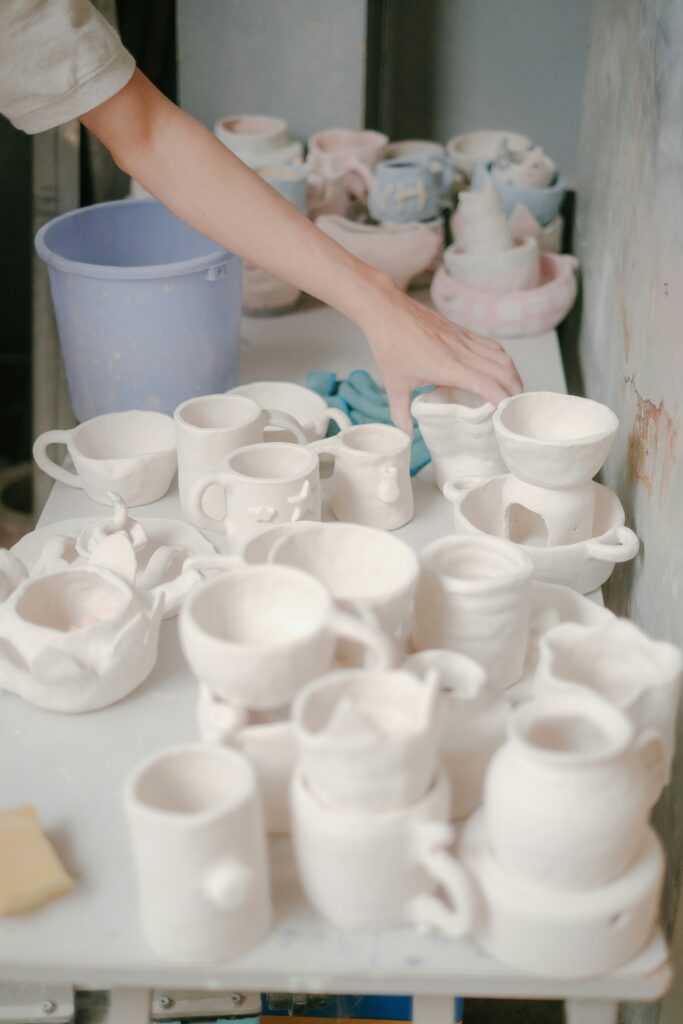
Andrea didn’t rush into expensive equipment or commit to a full course right away. Instead, she followed her curiosity. She experimented at home, making small pieces—trinket dishes, little cups, imperfect bowls.
Some worked. Many didn’t.
But each piece taught her something.
After a few months, she signed up for a couple of informal local ceramics classes. Nothing intense—just weekly sessions where she could learn the basics of working with clay, glazing, and firing pieces in a kiln.
“It felt really approachable,” she explains. “There was no pressure to be good. Everyone was just there to learn.”
Those classes gave her confidence. She started to understand the process more deeply and began combining what she learned there with her at-home practice.
Her kitchen table was still her main workspace.
Finding Her Style
Over time, Andrea’s pieces began to change.
What started as simple experiments slowly became more intentional. She developed a style that felt natural to her—soft shapes, earthy tones, slightly imperfect edges that made each piece feel human and unique.
She stopped trying to make things “perfect” and started focusing on what felt right.
Friends began to notice.
“They’d come over and ask where I bought something,” she says. “And I’d be like, ‘I made that.’”
At first, she gave pieces away as gifts. Then someone suggested she try selling them.
She hesitated.
“I didn’t feel like a ‘real artist’ yet,” she admits. “But I realized I didn’t need to be. I just needed to try.”
Where She Is Now
Today, Andrea still works from home.
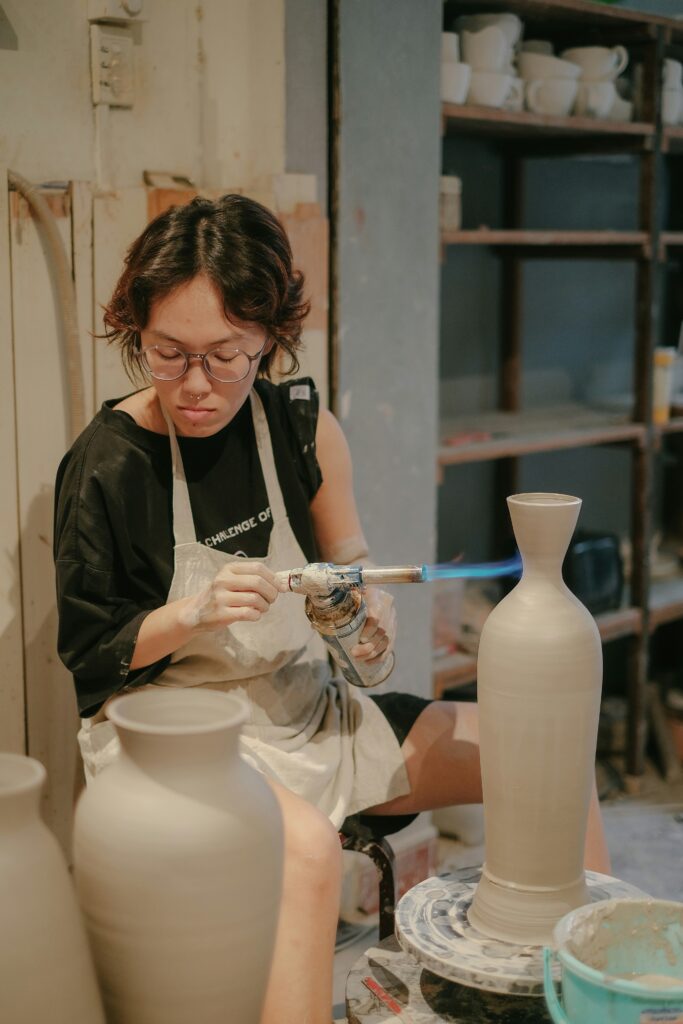
Her setup has grown a little—she’s added a small wheel and upgraded some of her tools—but her approach hasn’t changed. She still creates in a simple space, still experiments, still allows room for imperfection.
She now sells regularly at local markets, and her work continues to evolve.
But for her, success isn’t just about selling.
“It’s about the fact that I kept going,” she says. “That I started with nothing and built something I love.”
A Reminder
Andrea’s story isn’t about overnight success or perfect conditions.
It’s about starting small.
It’s about using what you have.
It’s about learning as you go.
You don’t need a studio.
You don’t need years of experience.
You don’t need to call yourself an artist.
You just need to begin.
And like Andrea, you might be surprised where it leads.